
After the June 19, 2026 Twin Cities hail: what to check on your roof
What happened on June 19
- When: Friday afternoon, June 19, 2026. Reports near Roseville came in around 5:20 to 5:30 p.m.
- Where: The storm tracked from eastern Wright County across the north metro, hit hardest around I-694 and Highway 36, then crossed I-94 into the east metro and on to Wisconsin.
- How big: Half-dollar to golf-ball hail across northeast Minneapolis, Columbia Heights, Fridley, Shoreview, Roseville, north and east St. Paul, Maplewood, and Woodbury. The National Weather Service reported several stones over 2 inches in northern St. Paul.
- How long: In some spots hail fell for more than 10 minutes and covered the ground.
The storm was narrow. Neighborhoods a mile or two apart got very different weather, so "my street seemed fine" doesn't tell you much about your roof.
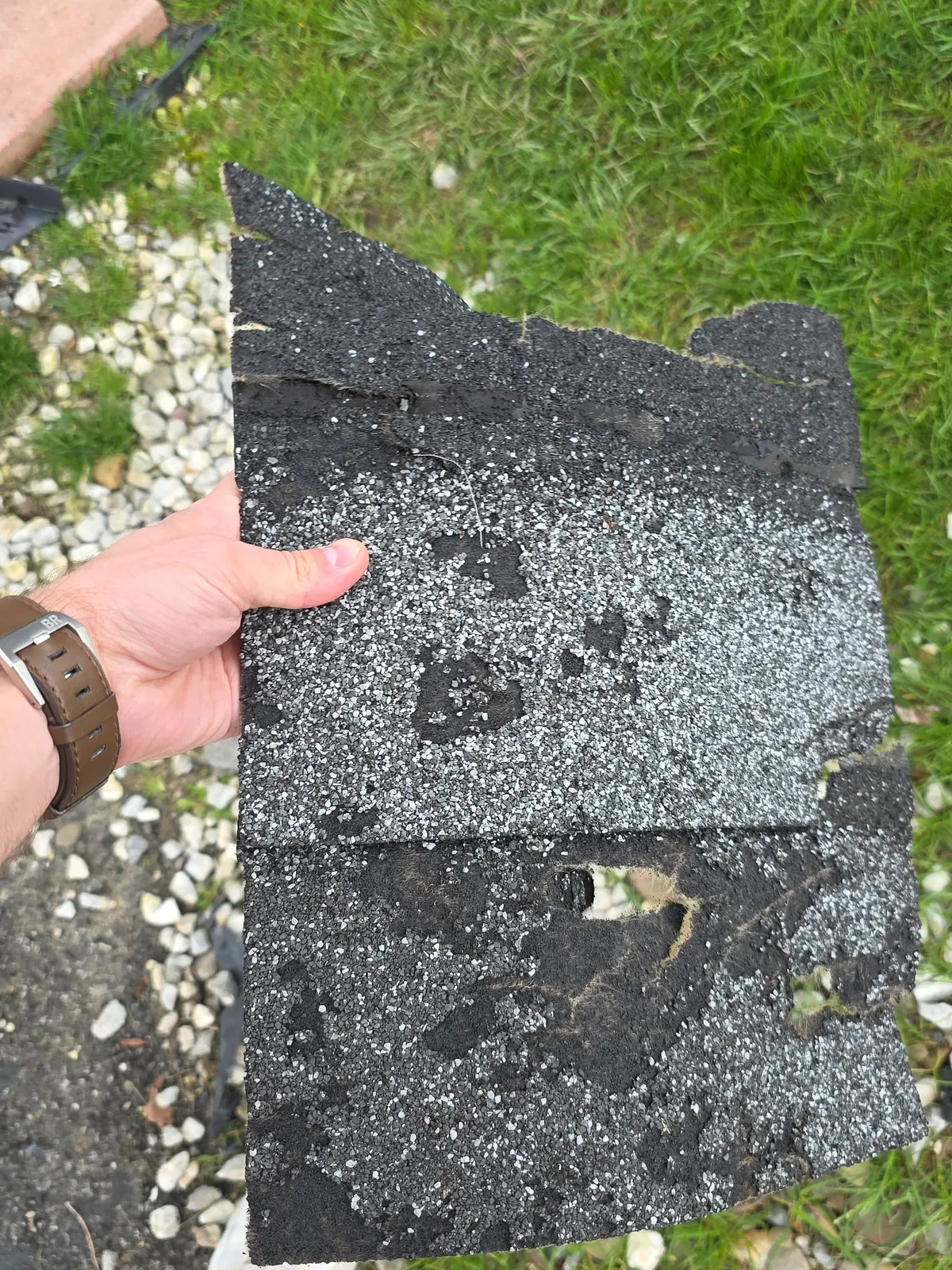
7 things to check from the ground
- Granules at the bottom of downspouts. A pile of sand-like grit often means hail bruising.
- Dents on gutters, vents, and downspouts. If the metal is dented, the shingles took hits too.
- Dings on siding, window screens, or a car that was outside that day.
- Dark spots on the shingles where granules are missing, visible from a window or across the street.
- Broken limbs on or near the roof.
- Stains on ceilings or in the attic after a hard rain since June.
- Damage on the side facing the storm. Hail was driven sideways by wind, so one side of the house can take most of it.
Stay off the roof. All of this can be checked from the ground, a window, or the attic.
Why check before winter
Most homes in the north metro suburbs hit hardest were built in the 1960s, and many roofs there were already 15–25 years old. Hail-cracked shingles let water in; in a Minnesota winter that water freezes, expands, and works the damage further. Add ice dams, and a small crack in October can be a ceiling stain in February.
Watch out for storm chasers
After big hail, out-of-town crews knock on doors across the metro. Before you sign: look up their Minnesota roofer license with the Department of Labor and Industry, ask how long they've worked in your city, make sure they'll pull the city permit, get everything in writing, and never sign something that hands over your insurance claim.
Watch Noah explain it
Common questions
It has been months. Is it too late to check?
No. Hail damage doesn't heal; freeze-thaw cycles make cracked shingles worse. Checking before winter shows exactly what's there, with photos. Some insurance policies have time limits on claims, so if you think you might call your insurer, check your policy.
My neighbor got a new roof. Does that mean I need one?
Not necessarily. Hail falls unevenly: on June 19, some spots a mile or two apart got very different storms. Your roof's age, material, and which way it faces all matter. An inspection answers it for your house.
Should I call my insurance company?
That's your decision, and it depends on your policy and deductible. Get the facts first: an inspection documents what's there with photos, so you know what you'd be calling about.
A roofer knocked on my door after the storm. Should I sign?
Don't sign on the spot. In Minnesota, check their state roofer license with the Department of Labor and Industry, make sure your city's permit will be pulled, and never sign anything that hands over your insurance claim.